
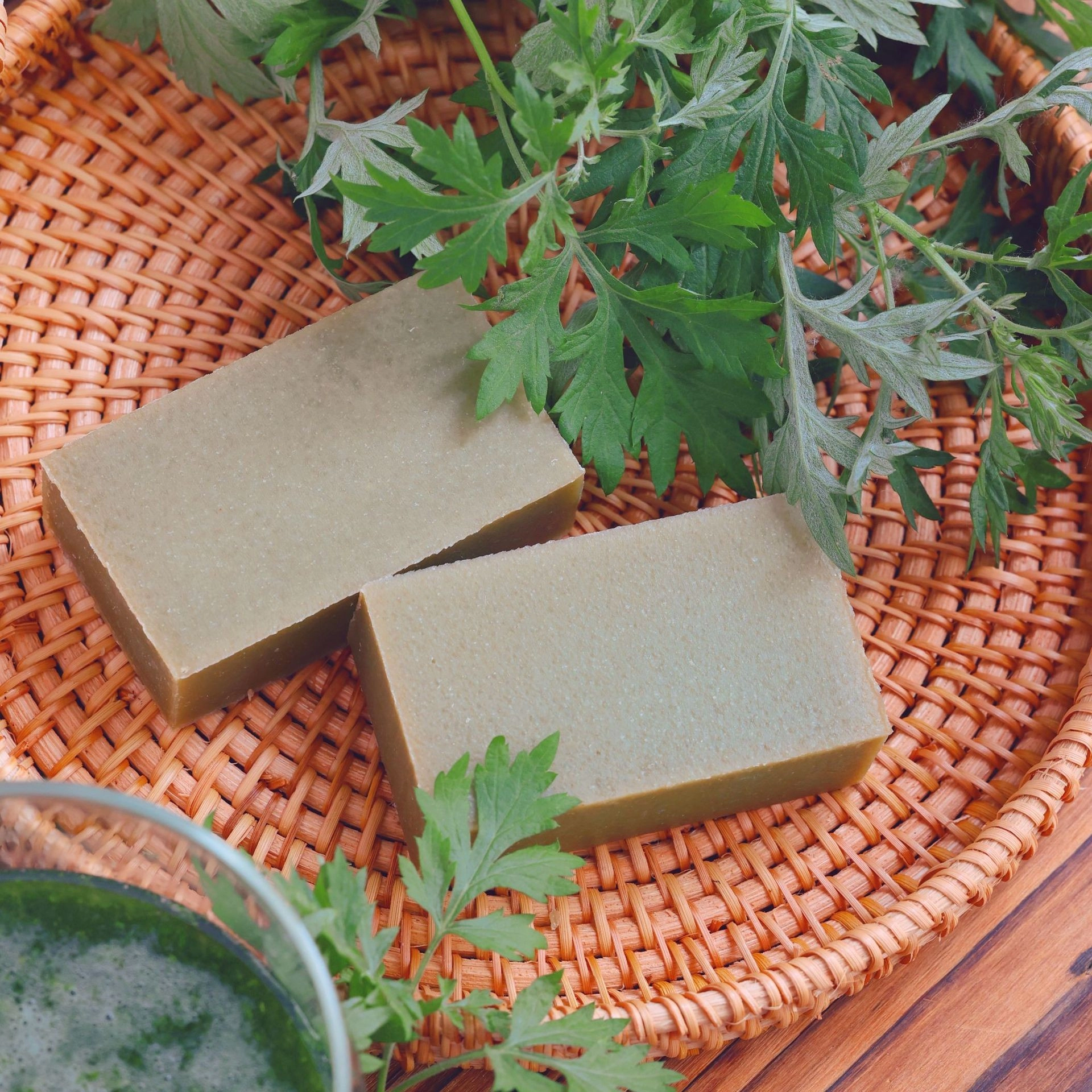
Natural colour and natural fragrance are the two promises that sell handmade soap — and the two specifications most likely to disappoint a buyer three months after delivery. Both are affected by the same enemy: time in the presence of air, light and residual alkalinity. Understanding which materials hold and which drift is the difference between a collection that looks consistent on the shelf and one that looks like a different product by the second production run.
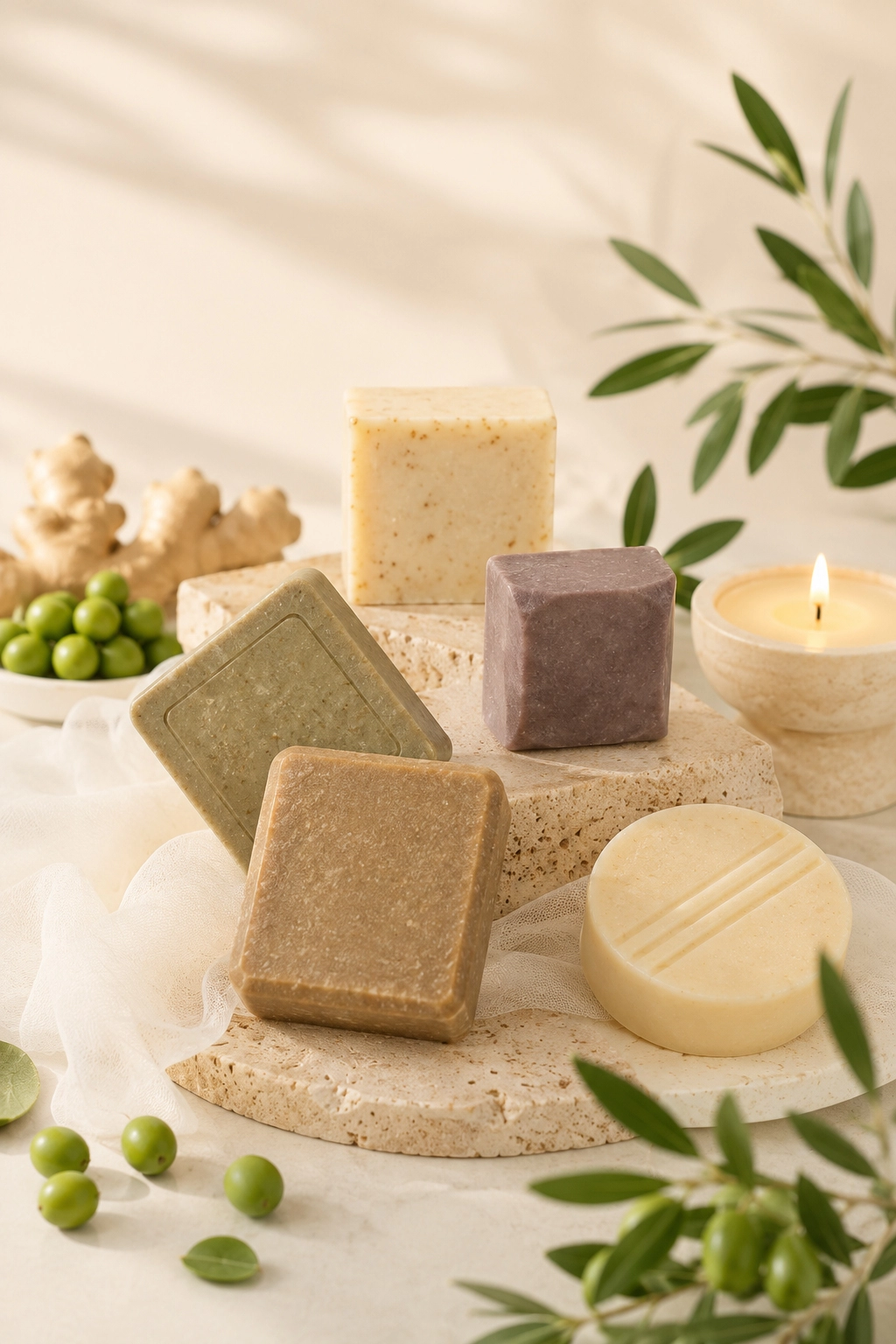
Why Natural Colourants Change Over Time
A synthetic dye is a stable molecule that stays where it is put. A natural colourant is usually a plant pigment, a mineral, or a combination of both, and plant pigments are designed by nature to break down. Chlorophyll degrades in light. Anthocyanins shift with pH. Curcumin from turmeric is sensitive to both light and alkali. A bar that is a vivid green on the day it is cut can be olive-grey six weeks later without anything having gone wrong in production.
Matching the Colourant to the Cure Window
| Colourant class | Typical behaviour | Best suited to |
|---|---|---|
| Mineral clays (kaolin, green, pink, rhassoul) | Very stable; colour is muted and matte | Earth-tone ranges, facial bars, long shelf life |
| Cocoa and coffee powders | Stable browns, darken slightly with cure | Scrub bars, men's lines, natural brown palettes |
| Spirulina and chlorella | Bright green at cutting, fades towards olive or grey | Short-cycle or milled bars where colour is added late |
| Indigo and woad powder | Deep blue, generally more light-fast than chlorophyll | Accent layers and swirls |
| Turmeric and annatto | Strong yellow-orange, shifts readily with pH and light | Warm accents; not for a colour-critical signature bar |
| Madder root and alkanet | Pink to mauve, sensitive to the trace temperature | Romantic and floral collections, milled route |
The commercial rule that follows from this table is simple: the longer the cure, the more muted the palette should be. If the design brief calls for a saturated, repeatable green, the milled route — where colour is added to a stable base late in the process — will hold far closer to the target than a cold-process bar that must sit for eight weeks.
Essential Oils Versus Fragrance Oils
The second decision is fragrance chemistry, and it is worth treating the two families as separate products rather than as a premium and a budget version of the same thing.
| Consideration | Essential oils | Fragrance oils |
|---|---|---|
| Typical use rate | 1–3% of oil weight | Around 3% of oil weight |
| Scent retention over 12–18 months | Variable; citrus notes fade first | Generally stronger and more durable |
| Effect on trace | Some accelerate sharply; spice and clove oils are the worst offenders | More predictable, though still batch-dependent |
| Discolouration risk | Low, though vanilla-adjacent absolutes may darken | Vanilla-containing blends commonly turn brown |
| Label and claim fit | Supports a strictly botanical ingredient story | Needs careful wording; not suitable where only botanicals are claimed |
Many brands run a hybrid: essential oils for the aromatherapy-led hero line and fragrance oils for the volume line, with the label wording reflecting the difference honestly.
Four Effects That Surprise First-Time Buyers
- Vanilla discolouration: vanilla notes darken a bar towards brown over weeks. This can be designed in as a deliberate tan or fought with a colour stabiliser — but it cannot be ignored.
- Soda ash: a powdery white film on the surface, caused by unsaponified lye reacting with air. It is cosmetic, not a defect in the formula, and is most visible on bars cured in moving air.
- Dreaded orange spots (DOS): small orange patches caused by oxidation of unsaturated oils. High-superfat bars and those stored warm are most at risk, which is one reason an 8% superfat is not automatically better than 5%.
- Warping and cracking: sugar-rich additives and fast water loss combine to bend a bar out of shape. Slower, more even drying prevents most of it.
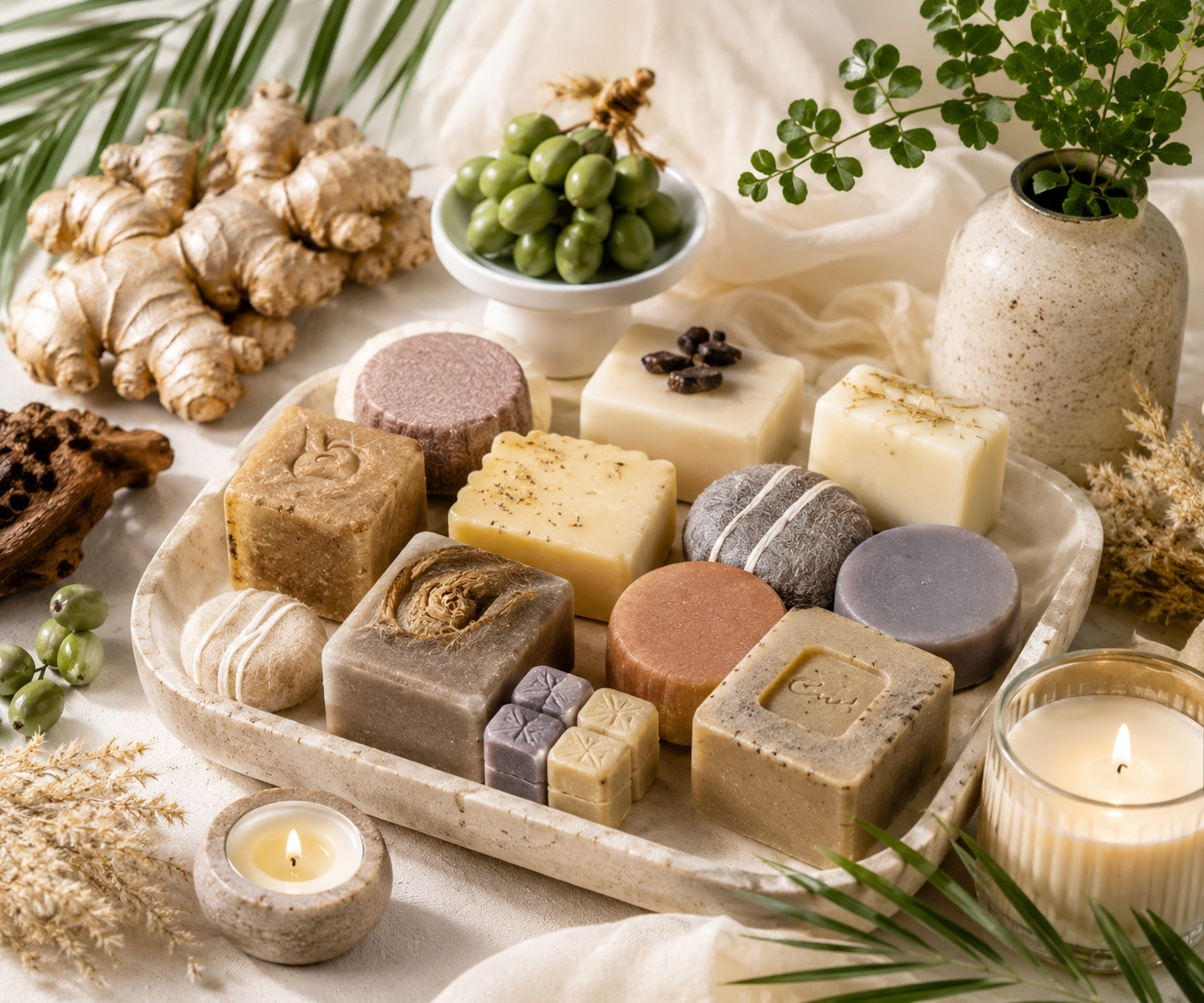
Getting Consistency Across Batches
Colour and fragrance cannot be "checked" at the end of the process — by then the batch is made. They are controlled at three earlier points.
- Weigh, never scoop. Botanical powders and clays vary greatly in bulk density between suppliers, so a volumetric measure is not repeatable. Record every colourant in grams.
- Anchor the reference. Keep a physical retained sample from the approved batch, sealed and dated. A photograph is not a standard, because screens and lighting shift.
- Re-check after cure, not before. Approve the colour against the retained sample at the point of packing, since that is the appearance the customer will see.
What to Ask Your Supplier
Five questions separate a supplier who can deliver a repeatable colour programme from one who cannot: Which colourants are used, and at what gram weight per batch? How is the colour checked after cure? What is the fragrance load by weight, and from which family? What is the retained-sample policy? And how long has the oldest stocked bar of this SKU been held, so you can judge real shelf-life behaviour rather than a promise?
Moonyoo Biotechnology develops botanical colour and fragrance systems around imported plant oils, herbs, essential oils and natural ingredients, with purely handmade, low-temperature production and export documentation for the US and European markets. Tell us the colour and scent direction you need and we will prepare a matched sample set on your chosen method.