

Most OEM soap quotations come back late, come back wrong, or never come back at all — and the reason is almost never the factory. It is the brief. A purchase enquiry that describes a soap in adjectives ("natural", "luxurious", "a bit like the one in that spa") leaves the factory guessing at seven separate cost drivers, and a factory that has to guess will either pad the price to cover its uncertainty or quietly decline the enquiry. This guide sets out what a handmade soap manufacturer actually needs in writing before a number can be quoted.
Quick answer: A quotable OEM soap brief contains seven fields — format, finished weight with tolerance, mould or shape, colour and decoration, fragrance with load rate, packaging and label spec, and order quantity with delivery term. Miss any one of them and the quotation becomes an estimate rather than a price. The single most commonly omitted field is the weight tolerance, which is also the one that most changes the per-unit cost.
Why briefs fail before production starts
A handmade soap factory is a formula business sitting inside a logistics business. Every soap bar is the product of a formulation decision, a mould decision, a curing window and a packing decision, and each of those four carries its own cost structure. When a brief arrives with the sensory outcome described but the four decisions left open, the factory cannot cost the job — it can only cost a job, and it picks the assumptions that protect itself.
The practical consequence for a buyer is that vague briefs do not produce cheap quotes. They produce quotes with wide ranges, long validity caveats, or exclusions that resurface later as change orders. In our experience across retail, hotel and gift programmes, the briefs that quote fastest and tightest are not the shortest ones — they are the ones where the buyer has made a decision and written it down.
The seven fields of a quotable brief
Treat the list below as a cost driver list, not a wish list. Each row is a field you must supply, and the third column is what the factory has to change, buy or schedule once you supply it.

| # | Field to specify | What it changes downstream |
|---|---|---|
| 1 | Product format — bar, milled bar, shaped/decorative bar, gift set | Which production line, which curing window, which base formula family |
| 2 | Finished weight and tolerance, e.g. 100 g ± 3 g | Fill control, reject rate, shipping weight, and whether a filling machine is needed |
| 3 | Shape and tooling route — existing mould, new mould, or cut shape | One-off tooling cost, minimum order quantity, first-article lead time |
| 4 | Colour and decoration — solid, swirled, botanical inclusion, wax decoration | Labour minutes per unit, reject rate, and batch-to-batch colour control method |
| 5 | Fragrance reference and load rate in % of finished weight | Material cost, allergen labelling, cure behaviour, and scent longevity |
| 6 | Packaging and label — pack format, artwork status, barcode and legal data | Packing labour, carton dimensions, freight cost, label compliance review |
| 7 | Order quantity, tooling responsibility and delivery term | Whether the job is viable at all, and who pays for what if it stops |
Fields 1 and 2 are the price at rest. Fields 3 through 5 are the price of differentiation. Fields 6 and 7 are where most of the surprise cost lives, because packaging and freight are frequently treated as an afterthought even though on a low-unit-value product they can approach the cost of the soap itself.
Base, colour and decoration
Start the technical section of the brief with the base. For handmade soap the meaningful choice is between a cold-process route and a milled route, and the distinction that matters commercially is not artisan purity — it is curing time, density and how repeatable the surface finish will be. A cold-process bar needs a curing window measured in weeks before it is fit to pack; a milled bar can be worked to a tighter surface and a denser body, which changes how the bar behaves in transit and in the guest's hand.
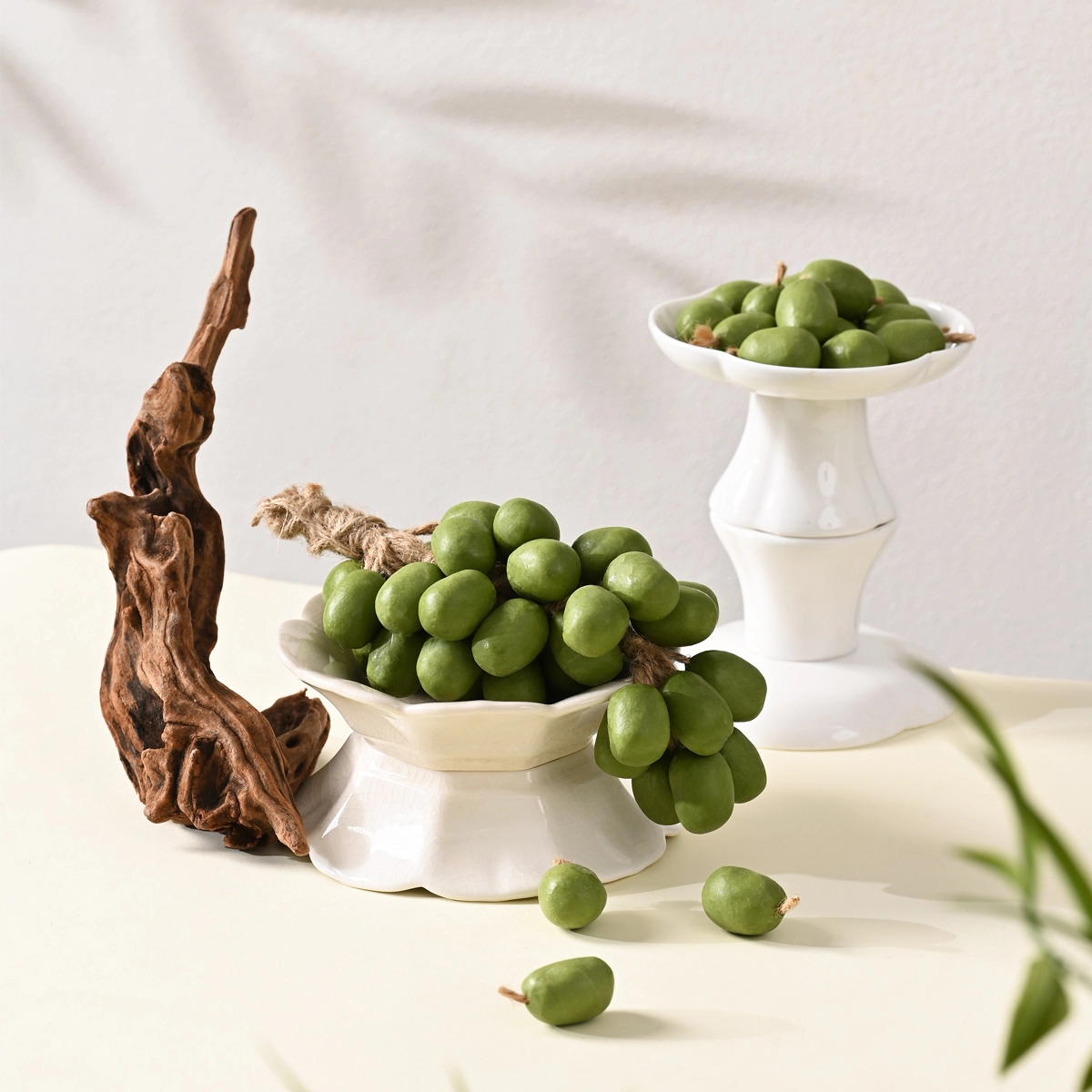
Then state the decoration, because decoration is labour. A single-colour bar with a clean mould line is a different manufacturing proposition from a bar with a botanical inclusion distributed through the body, or one finished with a moulded decorative element on the face. Each additional decorative operation adds handling, adds an inspection point and adds reject rate. If you want the decorative look but not the unit cost, say so explicitly — a factory can often propose a route that reads as decorative on the shelf while behaving like a plain bar on the line.
For colour, give a reference rather than an adjective. Photographs are the best reference, followed by a named colour standard or a physical swatch. Note also that natural colourants are sensitive to cure time and light exposure, so if colour fidelity over a twelve-month shelf life is a hard requirement, say that at briefing stage rather than at first-article stage.
Fragrance and load rate
Fragrance is the field where briefs are most often written in language the factory cannot cost. "A fresh, spa-like scent" is a brief to a perfumer but not a number to a costing sheet. Supply two things instead: a reference the factory can source or match, and a load rate expressed as a percentage of finished soap weight.
The load rate is the controlling number for the whole fragrance decision. Set it too low and the scent will not survive the curing window or the shelf; set it too high and you pay a material premium, risk skin-sensitivity complaints, and can disturb the texture of the bar itself. If you do not have a load rate in mind, ask the manufacturer to quote two or three load levels so you can compare cost against strength on a real sample rather than arguing about it on paper.
State the fragrance type at the same time: a compounded fragrance oil and a single-origin essential oil carry different sourcing lead times, different allergen-labelling obligations and different cost behaviour. A signature scent built from an essential-oil blend is a very different programme from one built on a matched fragrance oil, particularly if you intend to reorder it for years.
Shape, weight and tolerance
Weight tolerance is the most under-specified field in the entire brief and the one with the clearest cost consequence. Every soap bar loses mass as it cures and continues to lose a smaller amount in storage, so "100 g" is not a specification — a specification is a nominal weight plus an allowable band. A buyer who writes "100 g ± 3 g" has authorised a tighter fill-control regime and a higher reject rate than one who writes "≈ 100 g" and accepts that bars will vary.
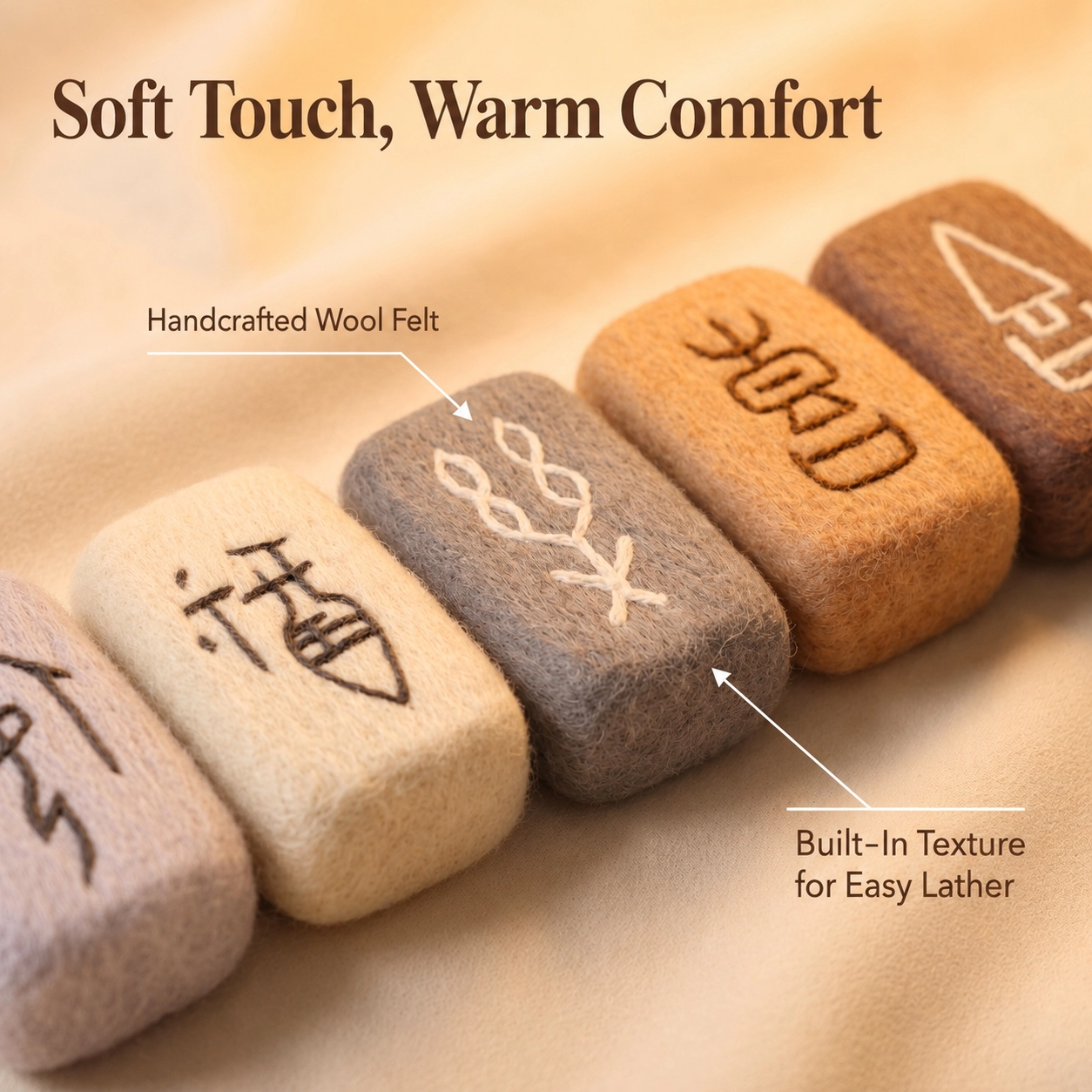
Decide which band you can actually live with by working backwards from the label. If the net-weight declaration on your label is checked against a legal tolerance in your destination market, that legal band — not your marketing preference — is the binding constraint, and the brief must say so. If the product is sold as a handcrafted item where natural variation is part of the proposition, a wider band is defensible and cheaper.
| Tolerance band | What it implies for the factory | Cost position |
|---|---|---|
| ≈ nominal, no band stated | Nominal targets only; natural variation passes | Lowest — no extra fill control or re-weighing |
| ± 5 g on a 100 g bar | Targeting discipline and periodic re-weighing | Moderate — routine quality check, low reject |
| ± 3 g on a 100 g bar | Per-unit fill control, cure-loss compensation, tighter packing rejection | Higher — measurable reject rate and slower packing |
On shape, tell the factory whether the mould already exists. A brief that supplies a shape reference the factory already has in tooling is materially cheaper than one that requires a new mould, and the difference is not only the tooling charge — a new mould adds a first-article cycle and pushes the viable order quantity upward.
Packaging and label specification
Packaging is the second-largest cost line on most soap programmes, and it is decided by two things you should state in the brief: the pack format and the artwork status.
Pack format covers the physical article — wrapped bar, paper sleeve, kraft box, rigid gift box, shrink band, and whether the bar is naked inside a larger set. Each has a different packing labour content and produces a different carton volume, which feeds directly into freight. If your programme involves sets, specify how the set is assembled and whether the set itself is shrink-wrapped or boxed.
Artwork status simply means: is the artwork finished and print-ready, or does the factory need to originate it? State which, and state who owns the finished artwork files at the end of the project. On private-label work this ownership question causes more late-stage friction than any technical issue.
Finally, list the label data you are obliged to show — net weight, ingredient declaration in the required order, manufacturer or importer identity and address, batch or lot code, and any market-specific allergen or warning statements. Handing that list over at briefing stage lets the manufacturer check the label panel area against the physical pack before you commit to a print run.
Quantity, tooling and delivery terms
Close the brief with the commercial frame. State the order quantity, the number of SKUs it is split across, and whether you expect that volume to repeat. A thousand units across one SKU and a thousand units across five SKUs are different jobs, because the set-up, curing, packing and labelling steps repeat per SKU.
State who funds tooling, and what happens to the mould if the programme ends. State the delivery term you are quoting against, and state the destination port or door so that the freight assumption is explicit rather than implied. Then ask for the quotation to be broken down at least by soap, by packaging and by tooling, so you can compare two suppliers on the same basis rather than on headline price.
| Item to sign off | What you are confirming |
|---|---|
| Physical sample, weighed at 24 hours | Nominal weight and cure trajectory are as briefed |
| Sample cut open | Internal texture is uniform; no voids or trapped air pockets |
| Three consecutive washes | Cleansing feel and lather are acceptable on skin, not just in the hand |
| Sample held four weeks | Colour and scent are stable across the curing window |
| Ingredient declaration checked line by line | Label text matches the approved formula exactly |
| Printed pack assembled and photographed | Pack, label panel and bar fit as intended before bulk print |
Frequently asked questions
How long should an OEM soap quotation take?
If the seven fields are supplied, a first indicative quotation can normally be issued within a few working days, with a firm price following sample approval and final artwork. Enquiries that drag on for weeks are usually missing fields 2, 5 or 6, and the elapsed time is spent in clarification rather than in costing.
Can I get a quotation without a finished design?
Yes, but expect it as a range rather than a price. Supply the fields you have decided and mark the rest as open, then ask for the quotation to be structured so that each open item is priced separately. That way, when you close the open items one by one, you can see exactly what each decision costs instead of renegotiating the whole job.
Is a lower weight tolerance always better?
No. A tight tolerance is worth paying for only when your label declaration, your retail channel or your logistics costing depends on it. For handcrafted product sold on the strength of its irregularity, a wider band is both cheaper and more honest, provided the label net-weight statement stays legally defensible.
Who should own the mould and the artwork?
Decide it in writing at briefing stage. Buyers who expect to move production later should fund and hold the mould, and should confirm they receive the finished artwork files. Buyers who expect a long single-source relationship can leave tooling with the manufacturer and negotiate a reduced unit price in exchange. Neither answer is wrong; leaving it unstated is.
What is the most common reason a reorder does not match the first order?
An unrecorded reference standard. When the original brief said "soft green" and nothing was retained beyond a photograph, the second production run has no anchor. Keep a physically sealed sign-off sample — of the bar, the scent and the printed pack — and hold it as the reference for every subsequent order.
Next steps
If you are preparing an OEM or private-label soap programme, start by downloading your own brief against the seven fields above and marking which ones you have decided and which are still open. Bring the decided fields and the open questions together, and request a structured quotation that prices each open item separately — that single change turns a vague enquiry into a costed programme.
For the adjacent decisions, see our guides on choosing between private label, OEM and ODM and on custom moulds, shapes and weight tolerances.