
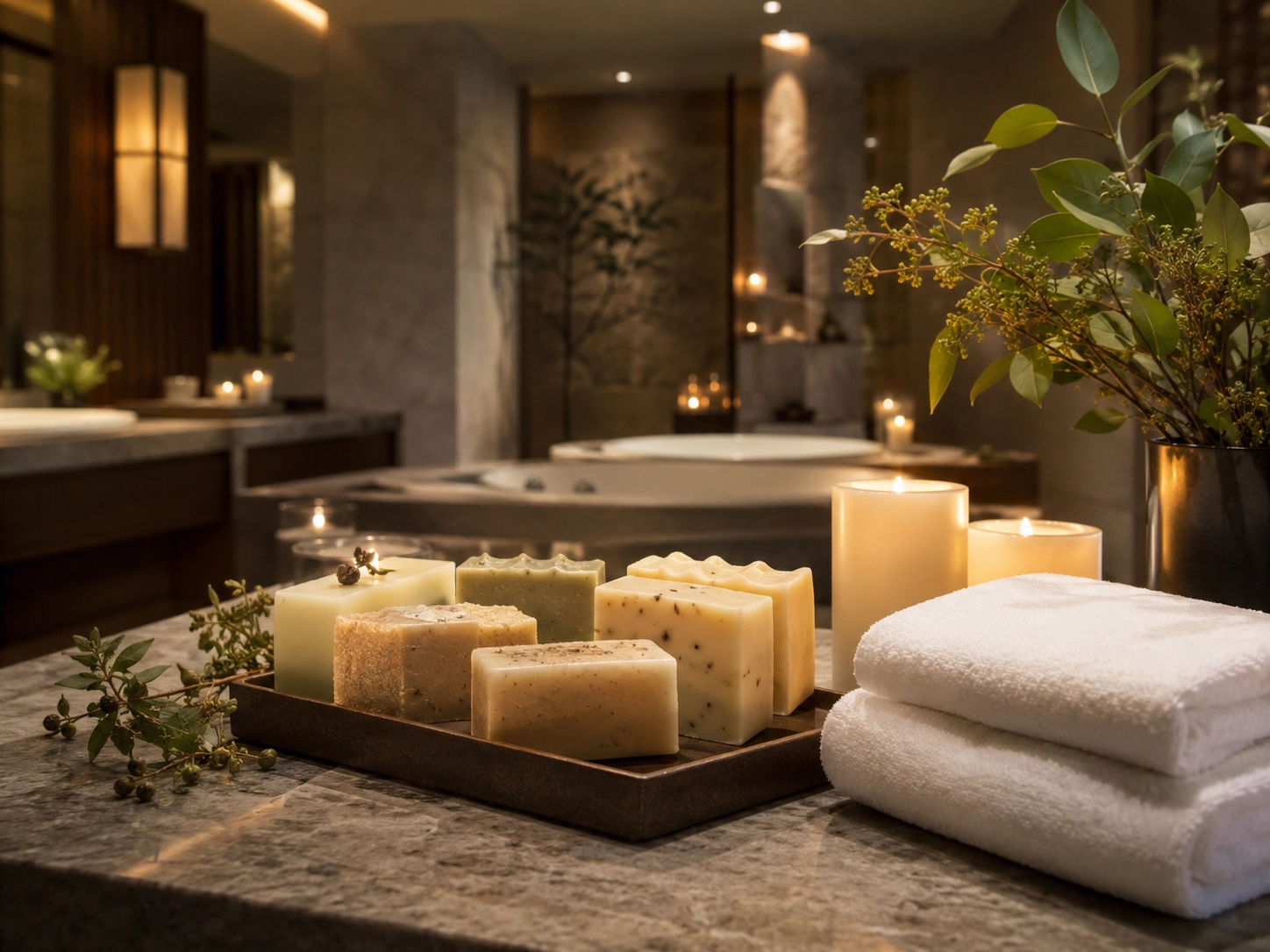
A sample is the cheapest part of a custom soap order and the one most often wasted. Buyers treat it as a formality — a box arrives, the bar is admired, production is authorised — when it should be the single point in the process where every assumption is still cheap to change. A handmade soap sample can prove five specific things and it cannot prove three others, and knowing which is which is the difference between a sample that de-risks a launch and a sample that merely delays a decision.
Quick answer: A custom soap sample is an evaluation instrument, not a preview. It can confirm formula feel, fragrance strength, colour as it stands on the day, surface finish and the accuracy of your written brief. It cannot confirm how the bar behaves after weeks of cure, how a production run will vary batch to batch, or how it performs in your specific packaging and climate. Budget at least two sample rounds before approval, measure rather than admire, and keep one bar from every round sealed and labelled as your reorder reference.
Why the sample stage decides the order
Every change in a custom soap programme gets more expensive as it moves downstream. Switching fragrance at the sampling stage costs a trial batch. Switching it after bulk production costs the batch plus the packaging plus the schedule. Switching it after the product is on a shelf costs all of that and the customer's confidence as well. The sample is the last moment when the whole specification is still mouldable, which is why it deserves more attention than the box it arrives in suggests.
There is a second reason. Handmade soap is unusually hard to specify in words. Two buyers writing "a warm, softly spiced scent" and "a creamy, gentle lather" can mean completely different things, and both can be honestly satisfied by a bar the other would reject. On machined parts you inspect to a drawing; on soap, the sample is the drawing. It converts your adjectives into a physical object that both sides can point at, which is precisely what makes it the right place to spend argument.
| Stage | Cost of changing the spec | What is at risk |
|---|---|---|
| Written brief | An email | Nothing but time |
| Sampling | A trial batch | Days |
| Pre-production approval | A partial run and a reschedule | Weeks, plus tooling already committed |
| Bulk production | The full batch | The batch, the packaging, the launch date |
| After delivery | The batch plus a reorder | All of the above plus shelf position |
The five things a soap sample can prove
Used properly, a sample answers five questions definitively. If your sample round has not addressed all five, it has not finished yet.
- Formula feel. How the bar lathers, how quickly it rinses, whether it leaves the skin tight or soft, and how it behaves on the face versus the body. This is the core attribute and the one no written description conveys.
- Fragrance strength and character. Not whether the scent is pleasant — your judgement already covers that — but whether the load rate is right. A scent that reads beautifully in a bottle can be faint in a cured bar, and a sample tells you which direction the load needs to move.
- Colour as formulated. What the colourant actually looks like in the finished bar, at the dosages being proposed, before the cure continues to shift it.
- Surface finish and edge quality. Whether the bar is smooth, whether edges are clean, how the surface feels in the hand, and whether the detail of any emboss or inlay is legible. This is where a mould that looked correct on paper shows its limits.
- Whether your brief was read correctly. The least appreciated function. A sample is the factory's interpretation of your specification made physical, so it is also a test of your specification. If the sample is wrong in a way you did not anticipate, the fault is frequently in the brief.
The three things it cannot prove
The limits of a sample matter as much as its uses, because a buyer who expects more from it than it can deliver will approve a specification on evidence that does not support the decision.
- Long-term behaviour. A sample arrives shortly after it was made. Cure is not finished, so the bar is still losing moisture and will continue to harden, shrink slightly and change in colour. How it behaves after three months on a bathroom shelf is not visible in a bar that left the curing rack last week.
- Batch-to-batch consistency. One sample is one batch. Natural colourants and essential oils vary between lots, and hand production carries normal variation in weight and finish. Consistency is a property of a process across many runs, and a single bar cannot demonstrate it.
- Performance in your market. How the product behaves in the humidity of its destination, whether it survives your chosen transit, whether your packaging protects it and whether the label satisfies the regulations of the country it is sold into — none of that is settled by a bar on a desk.
None of these gaps makes sampling optional. It makes the follow-up questions necessary: agree a tolerance for colour and weight, state your packaging and destination climate in the brief, and ask how the factory controls lot variation on the colourants and fragrance materials it uses.

What to send the factory before sampling starts
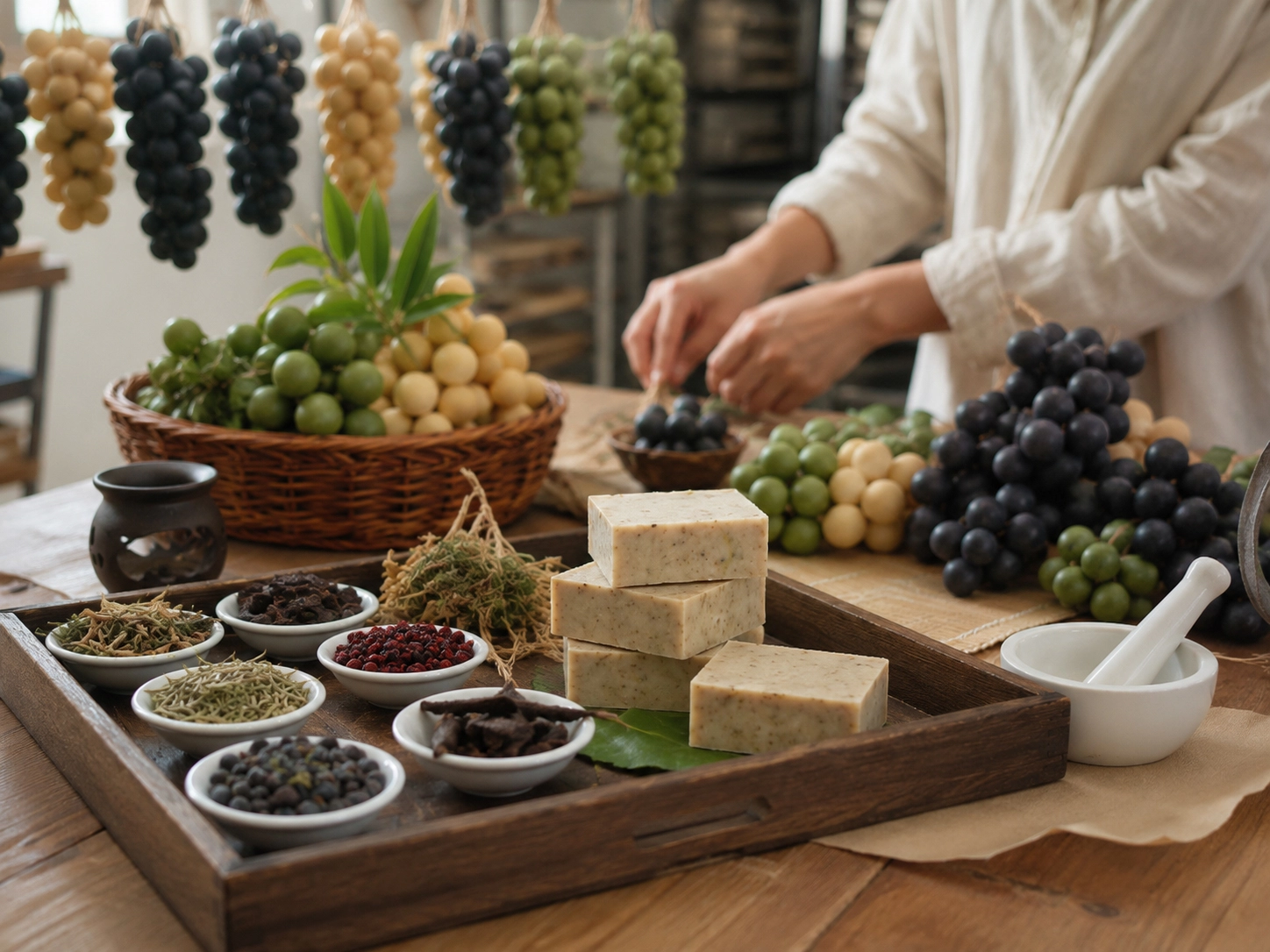
A sample is only as good as the brief that produced it. Factories routinely receive requests that read as a single sentence — "natural soap, lavender, please send a sample" — and then spend a round discovering the information that should have been in the first message. Sending these items up front typically removes a whole round from the process.
| Item to send | Why it changes the sample |
|---|---|
| Reference bar or drawing | Fixes geometry and feel at once. A drawing gives dimensions; a bar gives hand-feel, lather and surface. Sending both is the strongest brief available. |
| Formula direction | Whether you want a mild everyday bar, a scrub, or a shampoo-style bar determines the base entirely and cannot be inferred from a fragrance name. |
| Fragrance and load rate | Name the scent family and say whether you want a light, medium or strong scent throw. Load rate is the single most common reason a sample is rejected. |
| Colour, with a reference | "Blue" spans from pale sky to navy. A photograph, a swatch or a hex value removes that ambiguity before the trial batch is made. |
| Shape, size and weight | Determines whether a stock mould can be used or a bespoke one is required, which in turn drives both cost and minimum order quantity. |
| Packaging intent | Kraft box, printed sleeve, wrap and ribbon or a gift set all constrain the bar's dimensions. A bar designed without the packaging will not fit it later. |
| Destination markets | Shipping climate and labelling rules have a direct bearing on how the bar should be formulated and what must appear on the label. |
| Target quantity | Tells the factory whether it is sampling for a small first run or a bulk programme, which affects tooling advice and how the sample is planned. |
The last item on that list is not a detail. Sample cost and the minimum order quantity of the production run are connected, because both are driven by the same tooling and the same trial-batch capacity. If the production quantity is uncertain, say so and ask for both figures rather than letting the sample be planned against an assumed volume.
How to evaluate the sample when it arrives
Most sample feedback is delivered as an impression, and an impression is not a specification. The practical method is to score the bar against the brief you sent, in writing, within a day or two of arrival while the comparison is still useful.
- Photograph it first. Unpack, photograph the bar as received — in the packaging and out of it — and record the date. Colour shifts during cure, so the photograph is your only record of how the bar looked on the day.
- Weigh and measure it. Compare the actual dimensions and mass against the brief. Small deviations at sampling become larger ones at production volume.
- Smell it dry and in use. Fragrance reads differently on a dry bar and in a lather. Score both, because they are what the customer experiences in the shop and in the shower.
- Wash with it. Use it at the temperature you actually wash at, and score lather speed, lather density, how quickly it rinses and how the skin feels ten minutes afterwards rather than immediately.
- Check the finish. Look at the edges, the surface and any emboss or inlay under raking light. This is where a mould's limits show, and it is much cheaper to change a mould now than after a production run.
- Write a verdict per point. Go down your original brief item by item and mark each one accepted, rejected or accepted with a change. Send that document back, not a photograph of a thumbs-up.
Two disciplines make the difference. First, separate your personal preference from the specification — the sample's job is to satisfy the buyer you defined, not the buyer you happen to be. Second, resist approving a round because a second round would be inconvenient. The whole value of the sampling stage comes from the fact that changes here are cheap; that property disappears the moment production is authorised.
Sample cost, sample rounds and who pays
Samples are usually quoted separately from production and are commonly chargeable, partly because a trial batch consumes real capacity and partly because a chargeable sample is a mild filter against speculative enquiries. Cost normally reflects the work in the specific sample — a straightforward bar in a stock fragrance is a small exercise; a bespoke mould plus custom colour matching plus a printed sleeve is not.
Plan on more than one round. A single round is rarely enough on a fully custom brief, because the first sample exists mainly to reveal which parts of the brief need adjusting. Two rounds is a normal, healthy number; three is not a sign of failure but of a demanding specification. Build the sample rounds into your launch schedule at the outset rather than discovering the need for a second round after you have promised a date.
Two questions worth asking up front: whether sample charges are credited back against the first production order, and how many free revisions the quotation assumes before further rounds are billed. Both are ordinary commercial questions and both are much easier to settle before the first round ships than after the third.
| Sample round | What it settles | Budget it against |
|---|---|---|
| Round 1 | Whether the brief was read as intended; baseline formula feel and fragrance load | The trial batch and the first courier cost |
| Round 2 | The corrections identified in round 1, plus colour and surface finish | A second trial batch, plus any colour matching |
| Round 3 and beyond | Edge cases: a bespoke mould detail, a difficult colourant, a demanding scent throw | Further trial capacity and a slipping launch date |
Keeping a reference bar for the reorder
The single most useful habit in a repeat soap programme is to keep one unopened bar from the approved round, sealed, dated and labelled with its specification revision, and stored away from light and heat. When a reorder is placed months later, the reference bar is the only object that can settle a question about whether a new batch matches what was accepted.
A reference bar with no date is nearly useless. A reference bar with no specification revision is worse than useless, because it can be produced in a meeting as evidence for a specification that has since changed. Label it with the round number, the date, the fragrance load, the colour reference and the packaging version at the time of approval.
Keep a bar for each distinct specification you approve. Buyers who run several soap lines commonly find that the reference bar for the flagship product is the one they reach for, and the one they most regret not keeping when a colourant lot shifts and nobody can agree what the original looked like. The cost of setting a bar aside is one unit; the cost of not doing so is a disputed batch.
If you are planning repeat orders, the operational side of reordering is covered in the guide to private label, OEM and ODM models, which explains which party holds the recipe and therefore which party holds the reference standard.
Frequently asked questions
How long does a custom soap sample take?
Sample turnaround depends on the complexity of the brief and on whether bespoke tooling or colour matching is involved. Straightforward requests arranged around existing moulds and stock fragrances move fastest; a bespoke shape plus a matched colourant takes longer because the tooling and the formulation work happen first. Ask for the sample timeline as a separate figure from the bulk lead time, since the two are scheduled differently and the sample gate is the one that controls your approval date.
How many sample rounds should I expect?
Budget for two and treat a third as a normal consequence of a demanding specification rather than as a failure. The first round exists largely to expose which parts of the written brief need refinement; by the second round both sides are working against a physical reference rather than adjectives. One round is only realistic when the brief is simple and the factory already holds matching tooling.
Do I pay for samples?
Samples are commonly quoted separately from production, and a charge is normal because a trial batch consumes real production capacity. Many manufacturers credit sample charges back against the first bulk order, and most state how many revisions are included before further rounds are billed. Confirm both points before the first round ships.
Can the sample be made to my own design or drawing?
Yes — custom manufacture is generally based on the buyer's drawings or samples, and supplying both is the strongest possible brief. A drawing fixes the geometry; a reference bar fixes the feel, feel being the attribute that drawings cannot express. Where a bespoke mould is required for the specified shape, expect that tooling to be part of the sampling discussion and to influence the minimum order quantity for the production run.
Does the sample match what I will receive in production?
It matches the approved specification, but it does not guarantee identical appearance, because natural colourants and essential oils vary between lots and hand production carries normal variation. The honest approach is to agree a tolerance at the sampling stage — how much colour and weight variation you will accept — and to confirm the cure state the sample was shipped in, since a sample early in cure will differ from a fully cured production bar.
For the sequence that follows approval, see our guide to sample to bulk timelines, which places the sampling rounds inside the full production schedule. If your sample is being used to assess a supplier rather than a product, the manufacturer audit checklist covers the organisational questions that no sample can answer.
Next steps
Assemble the brief before requesting a sample — bar specification, formula direction, fragrance and colour brief, packaging intent and destination markets — and include a reference bar with a note explaining what you like about it. Decide in advance how many rounds you will run and what each round is meant to settle. Then evaluate what arrives with a written verdict rather than an impression, and keep the approved bar sealed, dated and labelled.
Moonyoo produces natural handmade soap by cold-process and hand-milled methods across four collections — Eastern Harvest & Flora, The Felted Craft Collection, The Gentle Paw Care and Herbal Alchemy Hair Care — and offers custom manufacture based on your drawings or samples. Send your brief and we will tell you which parts of it can be settled in one round, and which need a bespoke mould or a colour match first.