

The minimum order quantity is usually the first number a buyer asks for and the last number a factory can honestly give — because on handmade soap, MOQ is not really a raw-material constraint. Oils, lye and fragrance are cheap and freely available; what costs money is the mould, the batch you must run to justify that mould, and the curing rack space the finished bars occupy for weeks before they can ship. Understanding which of those three is setting your MOQ tells you whether the number you were quoted is negotiable, and how to plan a first order that is small without being uneconomic.
Quick answer: A custom handmade soap MOQ is normally set by three cost blocks — tooling (moulds and shape setup), batch economics (the smallest run that amortises formulation and changeover), and cure capacity (rack space for the 4–6 week cure). Ask which block is binding before you negotiate, because a factory can often flex one and not the others. A practical first order for a new brand is one base bar across a small number of fragrances, with packaging held to a neutral format, and the decorated or gift-boxed SKUs deferred to the second order.
Why soap MOQ is not a materials question
Buyers new to the category assume MOQ is a purchasing threshold: order at least X kilos and the factory will sell to you. That model fits extruded plastic or stamped metal, where the tooling is fixed and the marginal unit is nearly free. Handmade soap inverts it. The materials are among the cheapest inputs in the whole product — a bar weighs 100 g and most of that is saponified plant oil. What is expensive is everything the factory must do once for your order and cannot do again until the next one.
That reframing matters because it tells you where to push. If MOQ were a materials question, a larger order would only mean a better unit price. Because it is a setup-and-capacity question, a larger order means something quite different: it spreads a fixed cost that you are otherwise carrying entirely on yourself.
| Input | Nature of the cost | Does it scale with order size? |
|---|---|---|
| Plant oils, lye, water | Variable, low | Yes — roughly linear |
| Fragrance or essential oil | Variable, moderate | Yes, but with a minimum purchase itself |
| Moulds and shape tooling | Fixed, per design | No — identical at 500 or 50,000 bars |
| Formulation and trial batches | Fixed, per recipe | No |
| Production changeover and cleaning | Fixed, per run | No |
| Cure rack space and time | Capacity, per run | No — it is occupied either way |
| Packaging print run | Step-fixed | No, and it has its own MOQ |
Read that table again and the shape of the problem appears: five of the seven lines do not get any cheaper per unit as the order grows. They get cheaper per unit only because you are dividing them by a bigger number. That is why a factory's quoted MOQ is best understood as the point at which those fixed lines no longer dominate the unit price.
The three MOQs you will actually be quoted
When a supplier answers "what is your MOQ?" with a single number, that number is a summary of whichever constraint happened to bind. In practice three separate thresholds exist, and they are usually not equal. Knowing which one you have been quoted changes the negotiation completely.
| MOQ type | What it counts | What drives it | Typical flexibility |
|---|---|---|---|
| Per-SKU MOQ | Units of one specific bar (one shape, one fragrance, one colour) | Production changeover and batch minimum | Low — this is the real floor |
| Per-fragrance MOQ | Units sharing one scent across several shapes | The fragrance house's own minimum purchase | Moderate — can be pooled across SKUs |
| Per-packaging MOQ | Units sharing one printed box, sleeve or label | Print setup and minimum print run | Moderate — neutral formats remove it entirely |
The single most useful question you can ask is: "If I increase the total order but keep the number of distinct SKUs the same, does the per-SKU minimum change?" If the answer is no, the constraint is changeover or cure capacity, and volume will not move it. If the answer is yes, you are being limited by something that pools — usually fragrance or packaging — and there is room to restructure the order without ordering more soap.
This is also why an order with twelve fragrances is not twelve times the work of an order with one. It is one production campaign with twelve changeovers, and the changeovers are what you are being asked to pay for.
How mould and shape cost sets the floor
A soap mould is not a permanent steel die, but it is still a made object. For simple rectangular bars the factory may already hold a mould and your shape cost is effectively zero. The moment you want something else — a rounded edge profile, an embossed logo, a shaped bar, a botanical inlay, a felted or sculpted decorative form — a mould or a hand-crafting step is created for you, and its cost has to be recovered.
This is the cleanest example of why MOQ exists in this category. A mould that costs a few hundred dollars and serves 50,000 bars adds almost nothing per unit. The same mould serving 300 bars is a material part of the unit price. The factory is not being difficult when it quotes a floor; it is declining to subsidise your tooling.

Three practical consequences follow. First, ask what tooling already exists before specifying a shape — a design that reuses a mould the factory holds can have a materially lower MOQ than a bespoke one, for no difference the customer will ever see. Second, treat the first order as tooling acquisition and expect the second order to be cheaper at the same volume. Third, clarify who owns the mould once it is paid for; if you paid for it, you should be able to move it, and that question is worth settling in writing before production rather than after.
How cold process and hand-milling shift the number
The production method changes the MOQ because it changes how long a batch occupies the factory. Cold process soap is made in one pass: oils and lye are combined, the batter is poured into moulds, and the bars then cure. Hand-milled soap is made in two passes — a base soap is produced and cured first, then milled, re-melted with fragrance and additives, and formed. The two routes differ in the number of operations per batch, and every additional operation carries its own minimum.
Effect on MOQ, in one line each
- Cold process — single pass, so the floor is set mainly by batch size and cure rack space.
- Hand-milled — two passes, so the floor is set by the base batch and the milling batch; usually the higher of the two.
- Wool-felted or sculpted decorative forms — hand labour per piece, so the floor is set by labour hours rather than by batch size at all.
That last row is the one that surprises buyers. A felted or sculpted decorative soap has a minimum driven by how many pieces a craftsperson can finish in a working period. Ordering more soap does not reduce the labour per piece, so MOQ here is not a discount threshold at all — it is simply the smallest quantity the workshop will interrupt its schedule for. If your product concept depends on hand-applied decoration, expect a floor set by hands, not by kilos, and plan the range accordingly.
Cure rack space: the constraint nobody quotes
Soap must cure. The bars lose water, harden, and become milder over a period measured in weeks, and during that time they occupy physical rack space in a temperature- and humidity-controlled room. This is genuine factory capacity. A curing room holds a finite number of bars, and a bar cannot leave early to make room without shipping a product that is softer, heavier, and different from the sample the buyer approved.
Because cure capacity is invisible in a quotation, it is frequently the real reason a factory resists a large order at short notice — and equally the reason it resists an unusually small one. A tiny run still consumes a slot in the curing room and still needs its own scheduling, inspection and packing attention. From the factory's side, a 200-bar order and a 2,000-bar order can carry similar overhead; only one of them pays for it.

The practical move is to ask about cure capacity in the same conversation as price. "How many bars can you cure for us per month, and does that change if we split the order across two perfumes?" The answer tells you more about your real scaling ceiling than the MOQ number does. It also explains why an unusually attractive low MOQ deserves a second look: a factory with spare rack space is a different proposition from one that has simply agreed to absorb a loss.
Phasing a launch so the first order can be small
Most brands need a first order that is small enough to be low-risk and large enough to be quotable. Those two goals are reconciled by reducing the number of distinct things in the order rather than the number of bars.
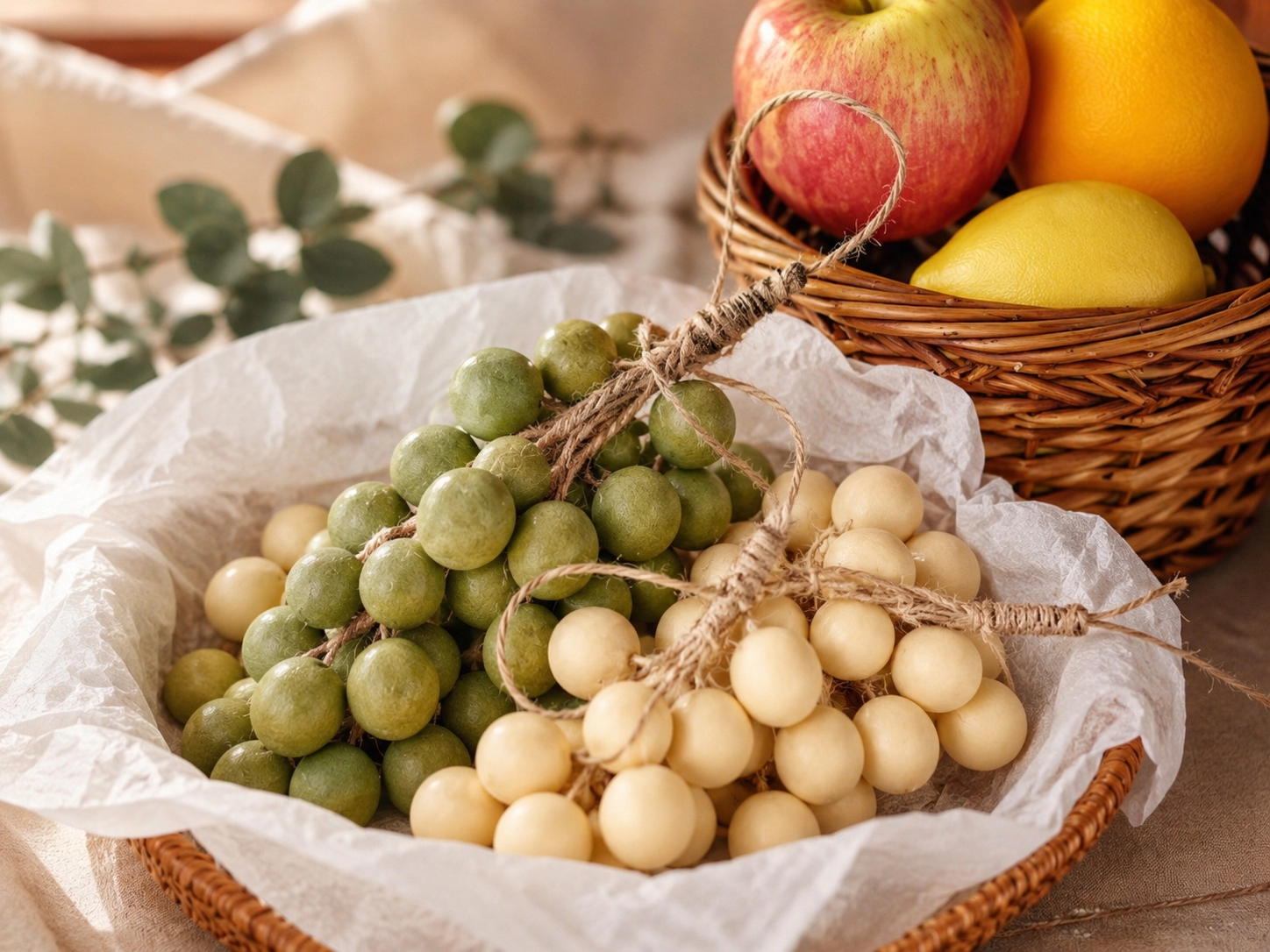
A workable first-order shape looks like this. Choose one base formulation — one oil blend, one superfat level, one method. Choose one bar profile that reuses existing tooling. Choose two or three fragrances rather than ten, so the per-SKU minimum is met by concentrating volume rather than by multiplying it. Hold packaging to a neutral format for the first run and add printed boxes on the reorder, once you know which fragrances sold. Defer all decorative, felted and gift-boxed SKUs to a second phase.
| Phase | What is in it | Why it is placed here |
|---|---|---|
| Phase 1 | One base bar, existing mould, 2–3 fragrances, neutral packaging | Minimises fixed cost lines; meets per-SKU MOQ without inflating total volume |
| Phase 2 | Add printed boxes and labels for the best-selling fragrances | Print MOQ is now justified by proven demand |
| Phase 3 | Add bespoke moulds, new shapes, gift boxes and seasonal editions | Tooling cost is now underwritten by a real sales history |
Phasing has a second benefit that is easy to miss: it converts an MOQ negotiation into a schedule. Instead of arguing a supplier down to an uneconomic first order, you commit to a sequence the factory can plan around, which is worth more to them than the extra units would have been.
Comparing a high-MOQ and a low-MOQ quote properly
The final trap is comparing quotes on unit price alone. A quote with a high MOQ and a low unit price is not automatically better than one with a low MOQ and a high unit price, because the two quotes are paying for different things.
To compare them, put three numbers side by side: the unit price, the total outlay at the quoted minimum, and the cost per bar sold after allowing for the stock you will not sell inside its shelf life. The third number is the one that settles most arguments. An MOQ that forces you to buy two years of inventory is not a lower price; it is a longer, riskier position in a product with a finite shelf life, and the carrying cost and eventual write-off belong in the comparison.
A useful rule: if the low-MOQ quote's unit premium is smaller than the cost of carrying and eventually discarding the excess units from the high-MOQ quote, the low-MOQ quote is the cheaper one despite the larger per-bar figure. Run that arithmetic before asking for a discount; it changes which discount is worth asking for.
Frequently asked questions
What is a typical MOQ for custom handmade soap?
There is no single category-wide number, because MOQ is set by tooling, batch and cure capacity rather than by material. A bar that reuses an existing mould and a stock fragrance sits at the low end; a bespoke sculpted or felted form with printed packaging sits considerably higher, because hand labour and print setup enter the calculation. The reliable approach is to ask which of the three cost blocks is binding on your specific brief, then design the order around that constraint.
Can I order a small first batch to test the market?
Yes, but the lever is range width, not total volume. Keep one base formulation and one existing bar profile, concentrate the order across two or three fragrances, and use neutral packaging for the first run. That structure meets the per-SKU minimum on each fragrance without requiring you to commit to a large total quantity, and it defers the print and tooling costs that would otherwise force the MOQ up.
Does a higher MOQ mean a lower price per bar?
Usually, because the fixed cost lines are divided by more units — but only up to the point where you can sell the extra stock inside its shelf life. Past that point the apparent saving is offset by carrying cost and eventual write-off. Compare quotes on cost per bar sold, not cost per bar purchased.
Is the MOQ different for each fragrance and each packaging format?
Often, yes, and in practice those are separate thresholds. Per-fragrance MOQ is driven by the fragrance house's own minimum purchase and can sometimes be pooled across several shapes that share one scent. Per-packaging MOQ is driven by print setup and vanishes entirely if you accept a neutral box or label for the first run.
Who owns the mould if I pay for it?
That is a contractual question and should be settled before production, not after. If you funded the tooling, you should have a written right to use it, to move it, or to have it retained on your behalf for future orders. Establish it while the order is being negotiated, when you still have leverage, and keep the mould's specification on file with your own records.
For the wider commercial context around this decision, see our guide to private label versus full OEM versus ODM, which explains how the sourcing model you choose determines which of these cost blocks you carry. Once quantity is settled, the next document to prepare is the OEM soap specification sheet, since an incomplete brief is the most common reason a quotation comes back late.
Next steps
Before going back to a supplier, establish three things on your side: the base formulation and bar profile you can accept, the fragrances you genuinely intend to launch, and the number of months of stock you are willing to hold. With those fixed, the MOQ conversation becomes a scheduling discussion rather than a price argument — and if the numbers do not work at the volume you want, the same framework tells you exactly which cost block to redesign instead.
Moonyoo manufactures natural handmade soap across cold-process and hand-milled methods, in four collections — Eastern Harvest & Flora, The Felted Craft Collection, The Gentle Paw Care and Herbal Alchemy Hair Care — with OEM and private-label programmes. Send your target quantity and preferred bar profile and we will tell you plainly which constraint sets your floor and what the smallest sensible first order looks like.